A parent holds the account
Rifflo has no separate child login. The adult controls sign-in, account data, export, and deletion.
Rifflo is built for a parent to hold the account and stay nearby while a child directs original characters, stories, comics, and worlds.
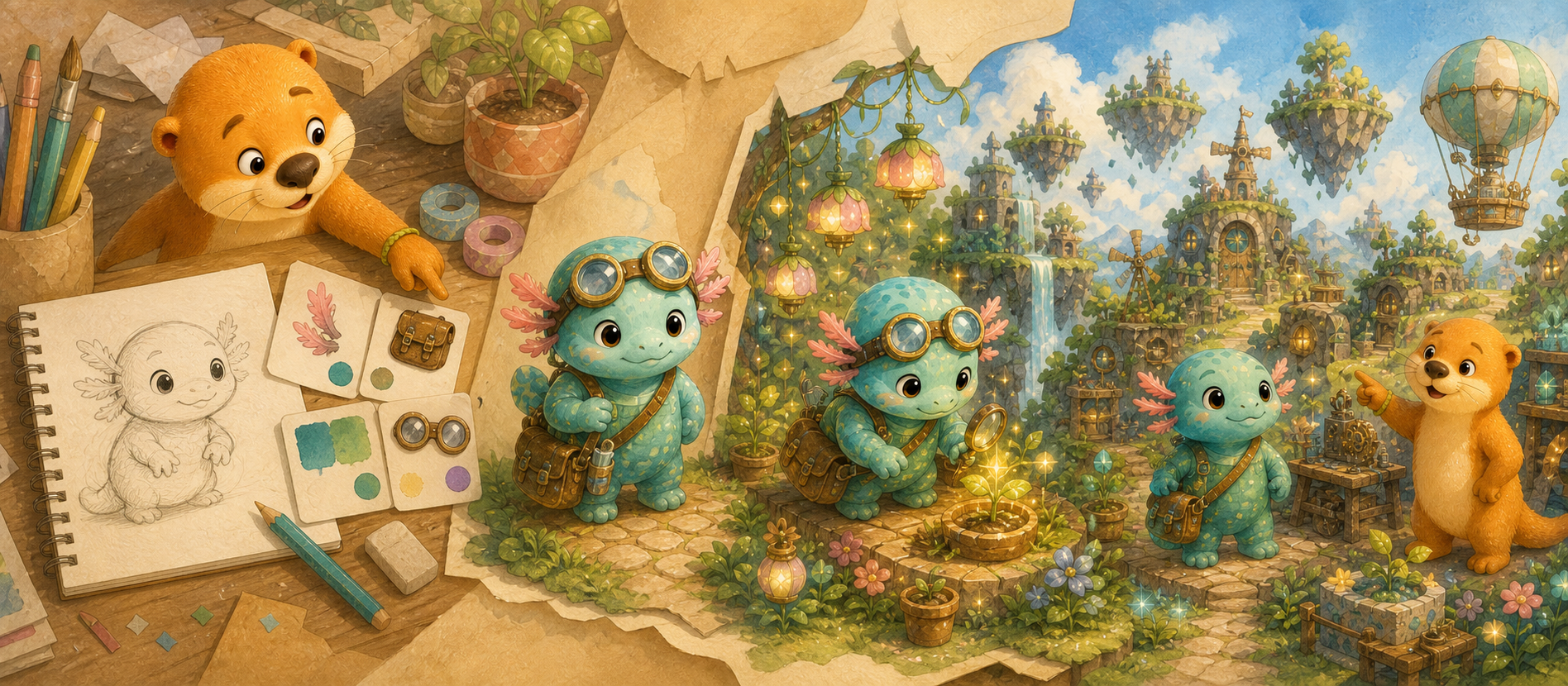 One idea can keep growing.
Families need to know who controls the account, what information is collected, where creative work is stored, what AI providers process, and what happens when a child types something they should not share.
Rifflo combines product boundaries with adult supervision. A parent or legal guardian signs in, confirms the current terms, and remains present. Children are reminded to use nicknames and not enter real names, schools, addresses, precise locations, phone numbers, email addresses, or photos of real children.
Rifflo has no separate child login. The adult controls sign-in, account data, export, and deletion.
Saved character worlds and generated media are account-scoped and private by default.
The interface does not need a child’s real identity, and eligible inputs reject email addresses and phone-number-shaped content.
The child can see the decisions they supplied and the artwork or words AI helped produce.

A character can have an invented name, home, dream, and challenge. Those fictional details are enough to build a rich world. Rifflo does not need a real child’s school, address, contact details, photograph, or precise location to make the experience work.
What parents should knowThere is no perfect first prompt. A child only needs one starting choice and room to make the next one.
The adult reads the parent confirmation, holds the Google-backed account, and stays nearby during the session.
Choose a creator nickname and invent character information. Do not enter a real child’s personal or contact information.
AI can be inaccurate or unsuitable. Pause, revise, or stop if a result does not feel appropriate.
The signed-in parent can export account data or permanently delete saved records and private media.
No. Rifflo is designed for children ages 10–12 to create with a parent or legal guardian nearby. The adult is the account holder and remains responsible for the session.
No. Rifflo asks for a short creator nickname and fictional character details. Families are told not to enter real names, schools, addresses, contact details, precise locations, or photos of real children.
No. Saved character worlds and generated media are private by default and isolated by the parent-controlled creator account.
A short recording is sent to Cloudflare Workers AI only to produce editable text. Rifflo does not store the audio recording, and voice input is not offered for creator or character names.
Yes. The signed-in parent can export account data and permanently delete the account, its database records, and private generated media from Account Settings.
No AI system can make that guarantee. Rifflo applies product safeguards, but a supervising adult should still review the experience and stop using any unsuitable result.
Start with one character. Let your child decide where the idea grows.